
single post
Subscribe to receive all updates on O’Shane Bryant Fitness Limited.





Canada, like the United States of America & England (UK), are top destinations for the Jamaican diaspora. Specifically for Canada, Ontario boasts over 81% of the Jamaican diaspora within the country (Google AI). And likewise, Ontario is host of the highest population in absolute numbers in Canada. According to Open Data Canada (retrieved October 13, 2026) ” Ontario’s population was 16,262,121 on July 1, 2026…and holds 38% of Canada’s total population.
As per The Legislative Assembly of Ontario, the top 2 populous cities in Ontario are as follows:
With Google Satellite imagery as support, Ontario Canada has plains, plateaus, cliffs, basins/lakes & their tributaries, rivers & their tributaries. It’s worth mentioning that a substantial area of Ontario’s land is comprised of woodland and associated ecosystems.
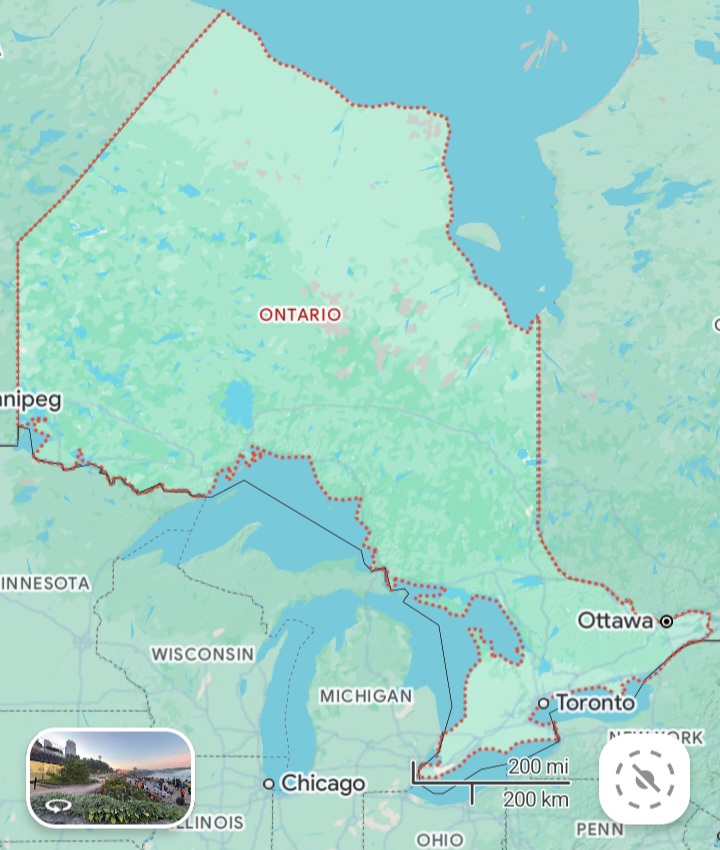
“Canada plans to build 5.8 million new homes by 2030 to help address the housing affordability crises. However, a disproportionate amount of these new homes are slated to be built in high risk flood and wildfire zones.” Sustainability Solutions Group website; retrieved October 13, 2026. This study went on to specify that of the total of 5.8million new housing, new housing projections by province and territory sees Ontario building an additional 2,619,000 housing units (approximately 45%)–Climate Risks New Housing Canada p.11, 2024.
When we take into consideration the likelihood of increased population density and the need to spread the population” to new lands, it becomes increasingly likely that these new homes can encroach on areas that can place these new houses and their occupants, under increased exposure of natural hazards.
Based on the support of this secondary source, combined with the our observed physical geography specifics of Ontario using Google Satellite imagery, flooding & wildfire are the 2 dominant natural or environmental hazards based on scale. When we include the reality of relatively fast-paced Climate Change, which brings with it, warmer temperatures (trigger for large scale wildfire & glacial/permafrost melt); as well as higher than normal frequency of intense storms (urban flash flooding), then the risk of these same hazards to increased housing in Ontario, can also go up. And this is where the pressure of increased premiums for home insurance can also be a reality.
According to McDougall Insurance & Financial blog article written on June 3, 2026, “Ontario home insurance premiums have jumped 84% between 2014 & 2024, while general consumer prices grew by just over 28% over the same period…The rising insurance premiums reflect real and significant changes i the risk landscape, from catastrophic weather events, to the soaring cost of building materials.”
So as you should be able connect, the soaring cost of building materials like timber/wood, is linked to the reality of wildfire. and what you can takeaway, is that the reality of catastrophic weather events is a major contributor to Ontario’s year-on-year home insurance premium increase.
Therefore, what you should be able to project, is that the selection of suitable lands for the additional 2,619,000 housing units is just the beginning of the challenge. The major and potentially longer term challenge for Ontario residents, will likely be:
Keeping apace with the home premium rates of insurance providers, which is trying to keep apace with the risk extent of the catastrophic weather events mentioned herein, that are exacerbated with global & local Climate Change (subjective and objective).

Online Training by Oshane Bryant
12 Individualized Exercise Sessions (1 Month) with Loyal Group (online) Access.
You must be a OB Fitness Web Chat Room member to access this content.