
single post
Subscribe to receive all updates on O’Shane Bryant Fitness Limited.





According to an Insurance.com (October 14, 2026) article, “Florida homeowners pay the highest homeowners insurance in the nation (USA), with an average annual rate of US$8,471…Natural disasters, state regulations, coverage and the availability of insurers all play a significant role in rate differences from state to state.”
“Some homeowners, such as those in South Florida, have been facing an extra US $500 a month in insurance costs. Plus large insurers such as State Farm, Allstate and Farmers are leaving places like Florida that are perceived as high risk…it’s possible that the highest risk areas will become uninsurable.” NAR REALTOR News (May 20, 2024).
Florida is predominantly flat with relatively low hills, ridges and basins (lake areas). The nature of Florida’s geology is carbonates (limestone) and clastics (non-carbonate pure). The geology and predominant physiography of Florida are significant factors for Florida’s relative large surface area of ground water availability that serves it’s population. However, it’s the same low elevation of Florida; the concentration of a significant number of it’s population on or near the coastline (such as South Florida); combined with the accelerated rate of sea level rise, why South Florida & Florida as a whole, is experiencing increased pressure of managing these geo-related threats.
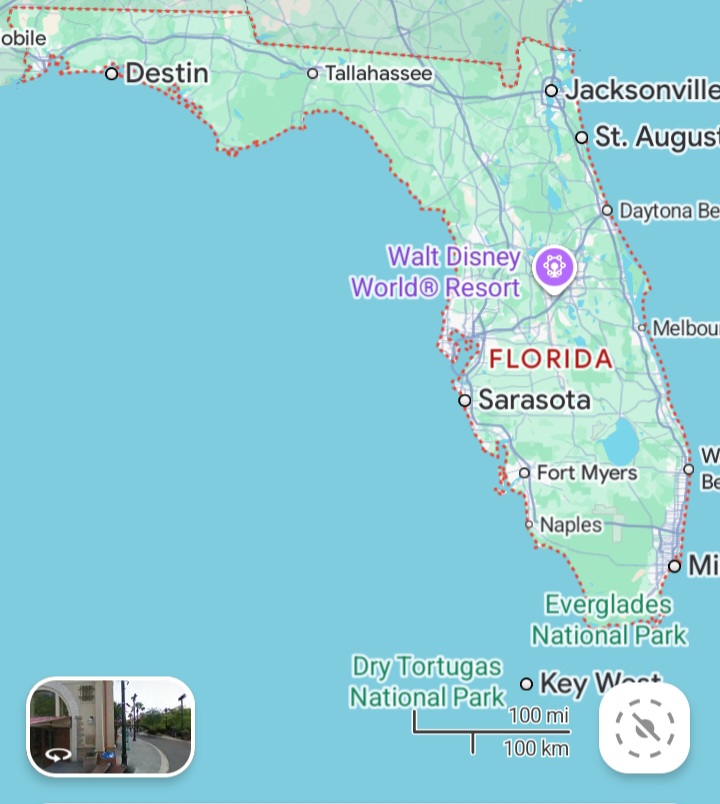
As FSU | Florida Climate Center 2016, states: “Florida is among the most exposed states in the country to sea level rise and coastal storms. With its low-lying coastal topography and more than 8,400 miles of shoreline, much of Florida and its coastal population are vulnerable to the impacts of rising sea levels…around Miami, sea levels increased 6 inches over the last 31 years, from 1985 to 2016, but they are expected to rise another 6 inches in half that time, over the next 15 years, according to the U.S. Army Corps of Engineers high scenario projections.”
But let’s not forget the natural hazard that has a relatively high occurrence of causing widescale (multistate) damage & destruction (wind, flooding, storm surge) in spatial & financial extent: Tropical Depressions, Tropical Storms & Hurricanes. Florida Climate Center lists some notable hurricanes in Florida’s history for the period of 1926-2024.
According to our math: a total of 23 hurricanes at Category 2 and above are listed. This equates to Florida experiencing a category 2+ hurricane making landfall every 4.3 years.
According to the US Economic Development Administration, Population estimate for 2025: Florida ranks at #3 in the United States, with 23,462,518. As US Census Bureau states: “Florida’s residential population increased by more than 4.6million residents since 2010. And is projected to approach 26 million by 2035 driven by roughly 467,000 new residents migrants annually for jobs, climate and tax policies.” DAVRON (accessed October 14, 2026).
Interestingly, even with the population growth data which should be a precursory push for construction to be keeping apace, Florida is experiencing the opposite. As Private Luminary Lending (July 2026) states: “Florida has been one of the fastest-growing states in the country for years. Now the market is entering a different phase: building permits have slowed across several Florida metros, signaling fewer new construction starts than in previous years”.
It is likely that this reduction in the construction of new housing keeping apace with projected population increase, that Florida can experience a widening in the housing affordability gap for renters and homeowners alike, between those of higher income and lower income. As Florida Housing Coalition states: “Florida has only 24 affordable and available units for every 100 extremely low income-renters…’Very low income’ is a household earning at or below 50% of the Area Median Income (AMI), adjusted by family size and specific county.”
As an example, in West Palm Beach/Palm Beach County (2026): 50% AMI limits range from US$45,000 (1-person) up to US$84,850 (8-person). Florida Housing Data Clearinghouse
Bridging all the pieces herein together, the onus is on you to ensure you are fully aware of and competent in managing your home selection, and/or renting plans (now & future), with consideration of:
What you must also never lose sight of, is the projected sea level rise of half a foot (6 inches) by 2031, and it’s expected immediate effects of reducing available land space along the coast (especially in South Florida); as well as the associated flooding (high tide, non-storm linked & storm linked); and saltwater intrusion into the aquifers specifically in South Florida to say the least. It is highly likely that this reality can trigger the following outcomes:
Commit daily to being in tune with the environmental change surrounding where you live.

Online Training by Oshane Bryant
12 Individualized Exercise Sessions (1 Month) with Loyal Group (online) Access.
You must be a OB Fitness Web Chat Room member to access this content.